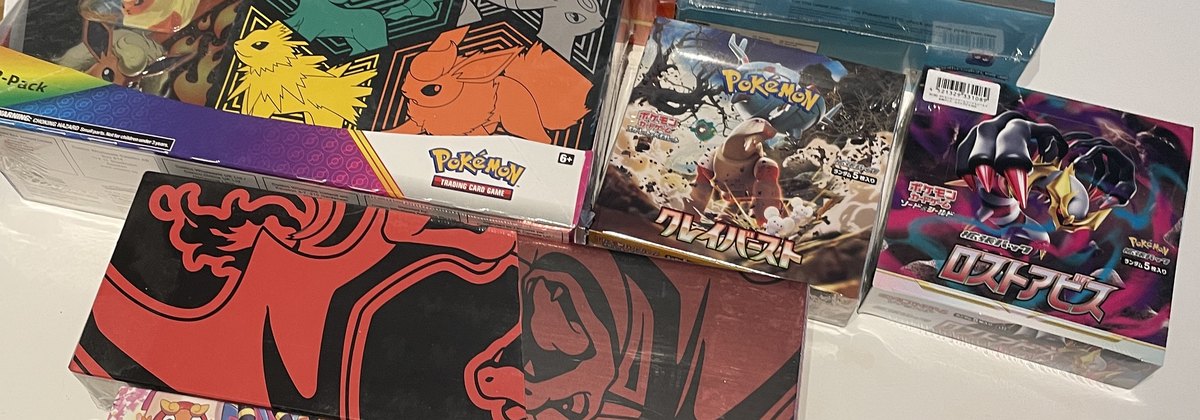
I sell both Japanese and English Pokemon cards, and after five-plus years and thousands of each passing through my hands, I've stopped asking which is "better." Here's how they actually compare, physically, financially, and in what buyers in my store really do.
Print quality: not a myth
The Japanese quality reputation is earned. Centering on Japanese cards is visibly more consistent, when I sort incoming English lots, off-center cards are a routine find; with Japanese lots it's the exception. The card stock handles differently too, and Japanese holos tend to arrive cleaner out of the pack. None of this means every Japanese card is perfect, but if you're buying with grading in mind, the starting odds are simply better.
The price gap
The same card in the same set frequently costs a third to half less in Japanese. Part of that is supply. Japanese sets print heavily, and part is that the largest collector market treats English as the default. The gap isn't uniform: alt-arts and trophy-tier cards can flip the premium entirely, and cards featuring characters especially beloved in Japan behave differently. This gap is the entire reason my Japan import pipeline exists.
Pull rates and god packs
Japanese sets have historically offered better hit rates per box, and some feature "god packs", packs where every card is a hit. That changes the economics of ripping product versus buying singles: Japanese singles prices reflect the healthier supply of hits, which is exactly what makes them good buying.
Which grades better, and which sells better graded
Better centering means Japanese cards earn top grades more often; my own PSA submissions have leaned Japanese for exactly that reason. The old wisdom says the North American market still pays more for graded English, but my sales tell a more interesting story: Japanese cards sell surprisingly well in my store, and demand for them from North American buyers has clearly strengthened. Population counts complicate it further: a rarer top-grade English card can still beat a common top-grade Japanese one, so check the graded comps for the actual card, not the folklore.
My recommendation by buyer type
Collecting for love of the cards: Japanese, no hesitation, cheaper, better made, identical art. Grading to sell: Japanese for grade odds, but confirm what the graded comp actually sells for first. Selling like me: both, buy Japanese for margin, list on both eBay.com and eBay.ca for reach, and let your own sales data, not forum consensus, tell you where the demand is.