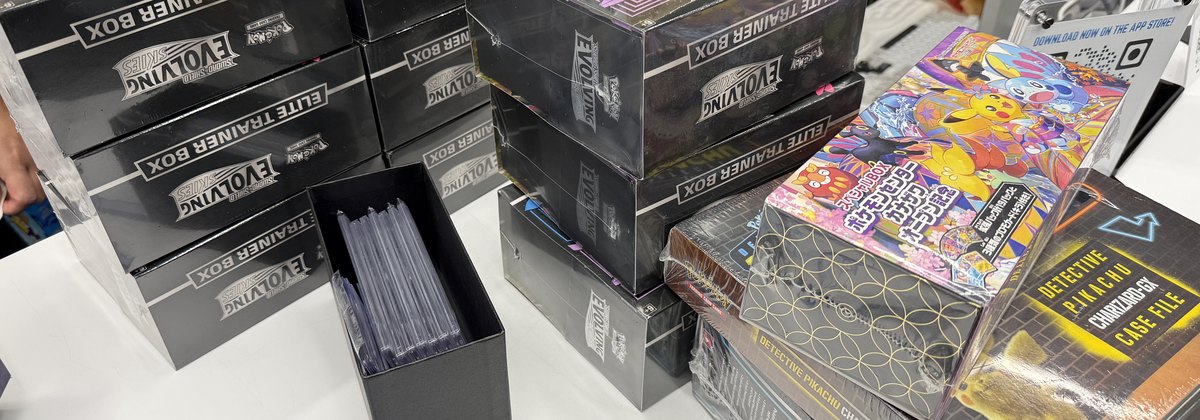
I've completed over 5,000 tracked sales on eBay, most of them Pokemon singles, and these days I ship sixty-plus orders in a typical week. When I started, I consistently overestimated what I'd keep from each sale, not because eBay hides its fees, but because the fees stack in ways that aren't obvious until you've watched a few hundred payouts land. This is the breakdown I wish someone had handed me, with a real worked example at the end.
How eBay's trading card fees actually work
For trading cards on eBay.ca, the math has two parts. First, the final value fee: 13.25% of the total sale amount, and "total" means the card price plus whatever you charged for shipping. Sellers miss that constantly. If you sell a card for $10 and charge $2 shipping, eBay takes its percentage of $12, not $10. Second, a flat $0.30 per order, which doesn't sound like much until you're selling $4 cards, where it's nearly 8% on its own.
That flat fee is why volume selling cheap singles is harder than it looks. On a $50 card, $0.30 is noise. On a $3.99 card, the combined fee load runs well over 20% of the sale before you've bought a stamp.
Is the Top Rated Seller discount worth chasing?
Top Rated Seller Plus knocks 10% off the final value fee, taking it from 13.25% to 11.925%. On any single sale it looks trivial: about 13 cents on a $10 order. At my volume it quietly compounds into a few hundred dollars a year, which is real money for zero extra work once you qualify.
My take: don't contort your business to chase the badge, but don't leave it on the table either. The requirements (tracking uploads, handling time, low defect rate) are mostly things a healthy card operation does anyway. The part that trips up card sellers is tracked shipping, since tracking on low-value singles can cost more than the card. My rule: under C$20 ships untracked letter mail, above that gets tracked. There's more on that math in my shipping guide.
Promoted listings: why I don't run them
Promoted listings add an ad fee percentage you choose on top of everything else, and I've chosen not to pay it. My reasoning: singles with accurate titles and scan-quality photos already surface well in eBay search, and at thin card margins every promoted percent is a straight subtraction from profit. Promotion earns its keep when you're one of forty identical listings of a hot meta card and visibility is the whole battle, that's just not most of my inventory.
If you do promote, know your margin first. A 2% ad rate on a listing netting 15% margin just gave away an eighth of your profit.
Worked example: a $10 card from listing to bank deposit
Here's a typical sale of mine, in Canadian dollars:
- Card sells for $10.00, buyer pays $2.00 shipping. Order total: $12.00
- Final value fee at 11.925% (with TRS Plus): −$1.43
- Per-order fee: −$0.30
- Actual postage: −$1.50 (untracked letter mail)
- Penny sleeve, toploader, team bag, envelope: −$0.40
Net before the cost of the card itself: $8.37, about 70% of what the buyer paid. If the card cost me $5 to acquire, I've made $3.37, a 34% margin on the sale price. Without the TRS discount it's $3.21; add 2% promoted listings and it's $2.97. The fees didn't kill the sale, but they took a third of it, and every listing decision moved that number.
The cross-border tax: currency conversion
I sell on both eBay.com and eBay.ca, and the American side carries a quieter cost. When eBay converts USD sales to CAD for payout, the exchange rate includes a conversion charge of around 3%, it never appears as a line-item fee, it's just baked into the rate you receive. On a $100 USD sale, that's about $4 CAD gone compared to the mid-market rate.
The USD listings still earn it back: the American buyer pool is far deeper, and cards that sit for weeks on eBay.ca move in days on eBay.com. But treat that conversion spread as a real fee when you price, it can rival everything else on the list combined.
What I'd tell a new card seller
Budget for keeping roughly 65–75% of the buyer's total payment, before the cost of the card. Price singles knowing the $0.30 flat fee punishes anything under $5. Charge shipping honestly but remember eBay taxes it. And track your actual numbers, every figure above comes from my own sales records, and getting them out of eBay's reports into a spreadsheet was the single most clarifying thing I did for this business.